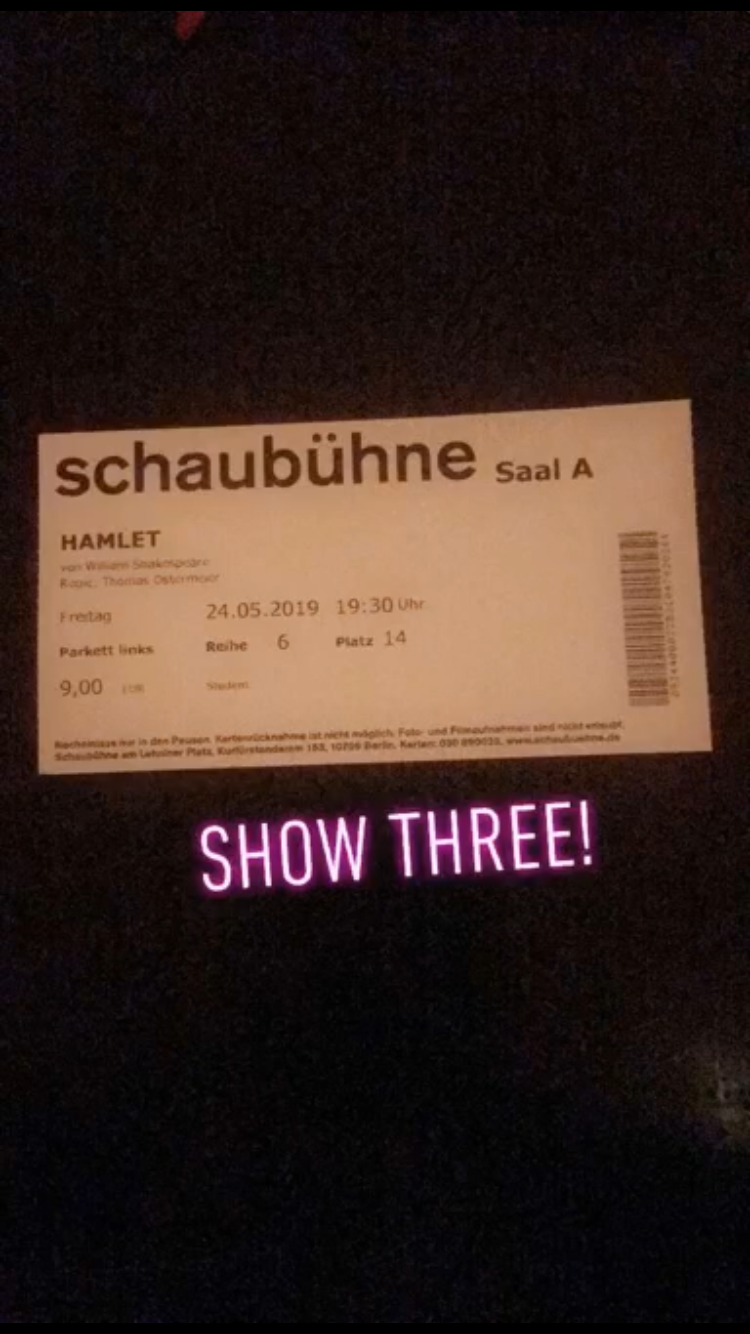
Wednesday, May 29, 2019

Lifelong Unlearning

A piece of advice echoed by many of my mentors was - be a sponge. Starting off a new experience, it can be very crucial to absorb and retain as much information as possible. To accomplish this task one has to soak up the knowledge surrounding them, much like a sponge soaks up water around it, transforming the self into a repository for new information.

But what good is a saturated sponge?


A sponge soaked in water is incapable of storing more of it, much like a person exposed to a certain flavor of knowledge who, whether with or without intent, ignores the rest. The sponge issue can be dealt with by wringing out the water, but wringing a human being will surely get you in trouble with your local law enforcement (if not worse). Luckily, this is where unlearning comes in.

During wrestling practice in high school, I remember my coach mentioning how we had to be broken down and built back up like wrestlers. A similar message was repeated in my U.S. History class - our minds had become too accustomed to a certain pattern of thought and change was necessary. In both these instances, I had no idea how or what I learned that would cause such a hindrance. I did not realize learning was a process initiated both voluntarily and involuntarily.

While lifelong learning is of great importance, so is lifelong unlearning. I do not say this out of concern for our memory, as the memory capacity of a human brain is around 2.5 petabytes, enough to hold 3,000,000 hours of TV shows. The concern arises because information we retain can prevent us from comprehending and appreciating new information. A simple example would be the following:


My concern with unlearning re-appeared during the first play we watched in Berlin - Arthur Schnitzler’s Professor Bernhardi. The play had blown me away. The incorporation of live video feed in the play combined with my curiosity in the unknown (to me) German language kindled an unfamiliar excitement in me. Despite this, I could not help but think of what I missed out on. Was I able to unlearn the engineering tendency to search for a fixed answer in order to appreciate the uncertainties of the play? I do not know. What I do know is that, as long as I can keep myself hungry for knowledge and new experiences, I will eventually get the hang of it. For now, I will only concern myself with two things: fine dining and breathing.

Tuesday, May 28, 2019

The Post Dramatic: a How To Guide

(as inspired by Gob Squad, Remote Mitte, Dramaturgy, Hamlet, etc...)


1. Feel the space. What does it say to you? What does it want?
What can you do with it? Think about what sorts of performances would fit in this space and what would not work in the space. Mess with it. Look at it upside down. An empty space is not an empty space if you mess with it. A car park is not just a car park. A stairwell is more than just a stairwell. Use the uniqueness to your performative advantage.
2. It’s PERFORMANCE ART, not THEATER. It’s an ACTIVE EXPERIENCE not a PASSIVE EXPERIENCE. It’s FOR EVERYONE, not just MILLENIALS INTELLECTUALS HIPSTERS OLD PEOPLE KIDS GROWN UPS THEATER PEOPLE. ya know?
3. consider your audience. how can you include them in your event? can they be actors? can they actively be involved? do they just sit there? do they move through the space? how much agency do they have? what do you want them to take away from this? is it okay for them to be confused? what should they feel? can you shock them? how do you engage them? who do you want your audience to be? don’t spoon feed them at all costs.
4. fuck the text. throw it out the window. what can you do without a text? what can you come up with? not everything needs to be a script. D E V I S E D  W O R K
5. music. an aural landscape is key. sound tells a story. what songs can you use? what sounds can you use? what sounds make up a song? music can be it’s own form of dialogue. a dialogue with the audience, with the space, with the performance. use it for transitions. use it to underscore scenes. fuck, use it wherever you want to emphasize things.
13. AbAnDoN sEnSe. LeAvE jUdGeMeNt aT tHe DoOr. Be OpEn.
7. Use technology. Really take advantage of it. Video. Mics. Headphones. How can you use it to serve you, the story, the experience? Can it enhance it?
8. $$$$$$$$. Get ready to not make any for awhile. If you love this you’ll find a way.
9. Know your theory. But also screw the theory. Just do it.
10. Research is key. Bring in anything for inspiration. You never know what could spake your next show. Look everywhere for source material. Books. Youtube. Music. Everyday life. A smell. Music. That really good currywurst you just had on the street to work. Literally anything.
11. don’t take it so seriously. have fun. experiment. accept that sometimes things work work. things are always in flux and in process. take risks. do the unexpected.


Monday, May 27, 2019

Learned Words - Hamlet to HE? SHE? ME! FREE.

What's that you say? You loved learning some German vocab words? And you loved discovering what meanings they gave to the piece they were learned from? And you want MORE vocab lists? Well, I'm glad you asked.


HAMLET
wahnsinnig - mad

der Zweifel - doubt

die Muschi - pussy

gebeten - past tense of bitten, which means to request

unschuldig - innocent/inculpable
Look back at my Professor Bernhardi vocab list as a reminder about un prefixes and the word schuldig.

tauschen - to swap/trade

der Becher - cup


EUROPEANA
Learned from the surtitles, in case anyone was wondering how I understood Czech. I didn't. 

die Masse - bulk/mass/regiment/compound/earth

die Schaffenskraft - creative power/creativeness
Schaffen means to create. Kraft means power

einkehren - to stop for a bite to eat

die Antibabypille - birth control pill
Another thing I love about German - the language is often very direct. 

die Ampel - traffic light
Ampelmann! Traffic light man! 

die Sägespänen - sawdust

die Truppen - troops/forces

platt - flat

WK - abbreviation for World War, Weltkrieg

litten - past tense of leiden, meaning to suffer
More on leiden in my previous vocab post.

die Kreissäge - circular saw/buzz saw

geschehen - to happen/to occur

der Weltraum - outerspace
Welt = world and Raum = room/space

siegen - to win/to conquer


HE? SHE? ME! FREE.
der Begriff - term/definition/concept

das Verhältnis - affair/relationship

genötigt - coerced/constrained

die Unterdrückung - repression/suppression/depression/oppression

Straf - correctional/punitive/penal

der Zwitter - hermaphrodite/intersex person
Note: I believe this word as well as the English translation "hermaphrodite" to have an attached stigma/derogatory connotation associated with it. 

die Gesamtheit - entirety/totality

die Leidenschaft - passion/fervor
Leid just keeps resurfacing in more and more words!

der Verrat - betrayal

treiben - to force/to push

der Schwanz - cock/pecker/dong/weenie/knob/prick/putz/dick/weener

eben - flat/smooth/even

Before I peace out, I'd just like to say that I'm learning so much and it makes me so happy!!! Hope you are too!!

Visiting The Queen


CLICKBAIT! I actually didn't meet The Queen.

I have always wanted to have tea with The Queen, but my trip to Queen Sophia Charlotte's Charlottenburg Palace will do. When we arrived at Charlottenburg Palace, we first admired the palace itself and an equestrian statue. Of course, we had to take a pic of this spectacle for "the gram". Then, we were given tickets, which were taken out of Christopher's pretty envelopes. However, before we stepped foot inside the palace, Christopher recommended us to trek around the court garden and take a good look at Charlottenburg Palace at the bridge.

Motion Europe Admiring Charlottenburg Palace.

Stepping into the court garden, I was expecting there to be only tourists, like us Americans from Rutgers University.  I was quite shocked by the mix of tourists and locals around the area. I saw a middle-aged woman smiling and passing by us, taking their morning jog. Is we were making our way to the bridge, we saw more joggers and families with children around the area! I presume that many locals come here in their spare time and enjoy the nature and wildlife in the Court Garden of Charlottenburg Palace. 

A Sea of Flowers in the Court Garden.

Speaking of seas and bodies of water, we reached a water-bridge where we got a lovely view of  Charlottenburg Palace. We took a good minute here admiring the lush green scenery and its juxtaposition to the royal palace. Mmm, isn't it breathtaking? 


The Court Garden - Across the Pond, Literally.
When we made our way back to Charlottenburg Palace, we had an encounter with Papa Swan. Will wanted a good view of the swans for a photo, but I think he got a little too close because Papa Swan was starting to wobble their way to him! As it turns out, these two swans had four little swanlings! Mama Swan was keeping an eye out for her younglings, but Papa Swan and stepped closer and closer to Will. I had to concoct a plan before Will gets attacked, so I sacrificed myself as bait. I stepped to the other side, inching towards Papa Swan. Papa Swan turned around and made eye contact with me. Will was set free, but I was its next target. Papa Swan slowly wobbled towards me, and I didn't move a single bit. He progressed towards me, and in snapping motion, he bit my dress! Let me tell you: don't. mess. with. the. swans. A local German warned Charlotte and me that the swans could get a little aggressive and he used his hands to mimic the snapping of the swan's beak to emphasize their defensive attacks. I think that Papa Swan's defensive actions were valid though, we were rather close to their children, and he was protecting his babies. 
Will vs. Swan.
After that dramatic confrontation, we headed back to Charlottenburg Palace to visit the old palace.
Before we entered the exhibition, we were given red wristbands, which allowed us to take photos inside the palace. This was pretty neat because could use our cameras to capture the beauty, art, and details that home Although I must inform you, the photos I have taken does not compare to the magnificent beauty of this royal home itself. When I stepped into the first room of the palace, I immediately noticed that the rooms were beautifully adorned with golden curved rococo styled frames, wall brackets, and armchairs, Austrian style curtains, and wooden rooms. The frames held paintings of Queen Charlotte herself, her husband, King Friedrich I, their son, politicians, dignitaries, relatives, and scholars.

The Esteemed Queen Charlotte.
It seems like Queen Charlotte had a knack for interior decor and Baroque-styled furniture. You can totally tell be the damask throne...

The Halls of Charlottenburg Palace.

... and marquetry pattern engraved in the wooden walls. Look. At. That. Symmetry.

Ceiling and Wall Art.
Even the ceilings were painted with Greeks gods and goddesses, adorned with flowers and gold frames, and the corners of the ceilings were had little figurines of scholars. Queen Charlottenburg held high value in the art and sciences, hence the small statues of intellectuals.

I am telling you, you don't see this sort of interior design in IKEA, so I am sort of stoked that I got to lay eyes on such beauty. But I digress, mirror on the wall, who is the fairest them of all. This palace is filled with mirrors because it served as a reflective surface of the Court Garden. As one can tell, Queen Charlotte not only had a deep appreciation of lavish interior decor and garden design but also had a fascination with Chinese art. If you look at the lower right corner in the picture of the Green Room, there is a display of porcelain, which was imported from China.

The Green Room.
Here are other pieces of furniture that were embellished with painted Chinese artwork.

Display of Chinese Paintings.
Harpsichord with Chinese Artwork.

Another Harpsichord with Chinese Artwork.


Study Table with Even MORE Chinese Artwork.
Needless to say, I was shocked by the Chinese influences in art at Charlottenburg Palace because the interior design of the rooms was mostly inspired by European art. I was even more blown away when I stepped foot in the Porcelain Cabinet.

Porcelain Cabinet. Creds to Erin!
This room is filled with 500 pieces of Eastern porcelain. The way porcelain was manufactured was a mystery to Europeans. Therefore, porcelain was precious and they would only display the porcelain as a decorative art rather than using it. I was obviously amazed by this spectacle and I told Christopher all about it, and he gave me a little history lesson: the time Charlottenburg Palace was erected near the Era of Enlightenment. As it turns out, Europeans looked up to Chinese scholars, knowledge, and developed civilization. Christopher went on to say that The Orphan of Zhao was the first Chinese play to be translated in Europe. Writers had a fascination with the structure of the play. Voltaire also had a deep fascination with the play and its themes of Chinese morality and civilization. Honestly, who knew? I am most definitely going to check out that play!


The Euro System

What I have learned these past few days:
I sometimes wish I was European.


                                                            A relaxing afternoon in the Schaubuhne waiting room 


I sometimes wish I was European because I enjoy the quality of life much better.
Why do Americans value the ideas that we constantly need to be busy, schedules filled so densely that spending time with friends, family, or self care needs to be planned in advance? Why can’t we take everything day by day and enjoy and be grateful for life, to be alive? I have let myself enjoy the days, enjoy the weather, and just sit an R E L A X, something I rarely do at home. Being here I am in a better state of mind, a happier and more excited energy which I don’t want to fade with my return to the states.


DPA, Wolfgang Ischinger. The local Germany.com. 2019


I sometimes wish I was European because I wish I was raised in a country where cultural importance goes beyond a national identity. I have noticed that Germans, whether it's Berliners specifically I don't know, are not only fluent in two or more languages, but they keep up with politics, music, and art outside for their own country/culture. Europeans have a certain cultural awareness that I wish most Americans had. I want to be a more worldly and knowledgeable person and I believe that a lot of my American centric ideas are because Americans like to boast the melting pot theory but I have learned in reality that Americanness is just neutralizing all other cultures in order to fit into the American standard.


                                                                     Berlin Wall Memorial


I wish sometimes I was European because I wish I grew up in a country/culture that isn’t trying to rewrite their history. At home I see that our own history is taught to us under a blanket of nationalism which attempts to justify past actions. I have been thinking about this a lot at home but with the culmination of the shows we have seen as well as visiting the Berlin Wall memorial, I found myself making connections without meaning to. With shows like Divadlo Na Zabradi’s production of EUROPEANA, the reflection of history calls to the audience to action, a theme I have found in almost all the works we have seen, in one way or another. This is where I want to take this post, to highlight that across the board there is a theme of theatre for some sort of change. I don't feel that way when I go to shows in New York or even in regional theater. I think that's why my aversion to American theatre has more to do with it leaving me unaffected. I have recently felt uninspired and almost lost with the theatre that I want to create and I believe that after this trip I won’t feel like that anymore. Fingers crossed.


Wow, I wish I was European.


Stream of Consciousness - Prof. Bernhardi to Hamlet

btw, photos are used to separate thoughts. they may be related to the text, they may not. 

Professor Bernhardi was frustrating because I found the language difficult to understand. That feeling was multiplied because after being on a German-learning journey for eight years, I felt like I should understand the language. Being able to pick up on bits and pieces almost made things worse because it made letting go of the words that much harder. However, the acting in this show was so transparent and the action so specific that even with the language barrier, I came out understanding much more than I initially thought I had. 

Der letzte Gast was comforting in that I understood the language. In contrast to Professor Bernhardi, however, I came out with little understanding of the plot/action/story.

The juxtaposition of these two pieces was highlighted by seeing them on consecutive nights. From this experience, I have learned that language is not the only tool, or rather, not the most important tool, with which to understand theater. Good acting, directing, design, and above all specificity in those categories, can be much more important. 

Flight from Switzerland to Berlin!
I do not think I have ever seen cameras/projections used on stage in the same way that they were in Professor Bernhardi and Hamlet. The effect was stunning, engaging, and such an aid to the storytelling, especially in Professor Bernhardi. Specifically in Professor Bernhardi it sometimes made me uncomfortable to see the actors faces so large, their eyes appearing to stare into mine, while they stood on stage looking elsewhere. It's disconcerting to see someone standing profile in front of you, and yet seeing their face and eyes head-on.

Being uncomfortable is so powerful. Making someone uncomfortable is so powerful. Being uncomfortable helped me to engage more deeply with the piece and enticed me to ponder why the choice was made to use the camera-projections and to use them in such a specific way.

die Vorführungen - the projections // projizieren - to project 

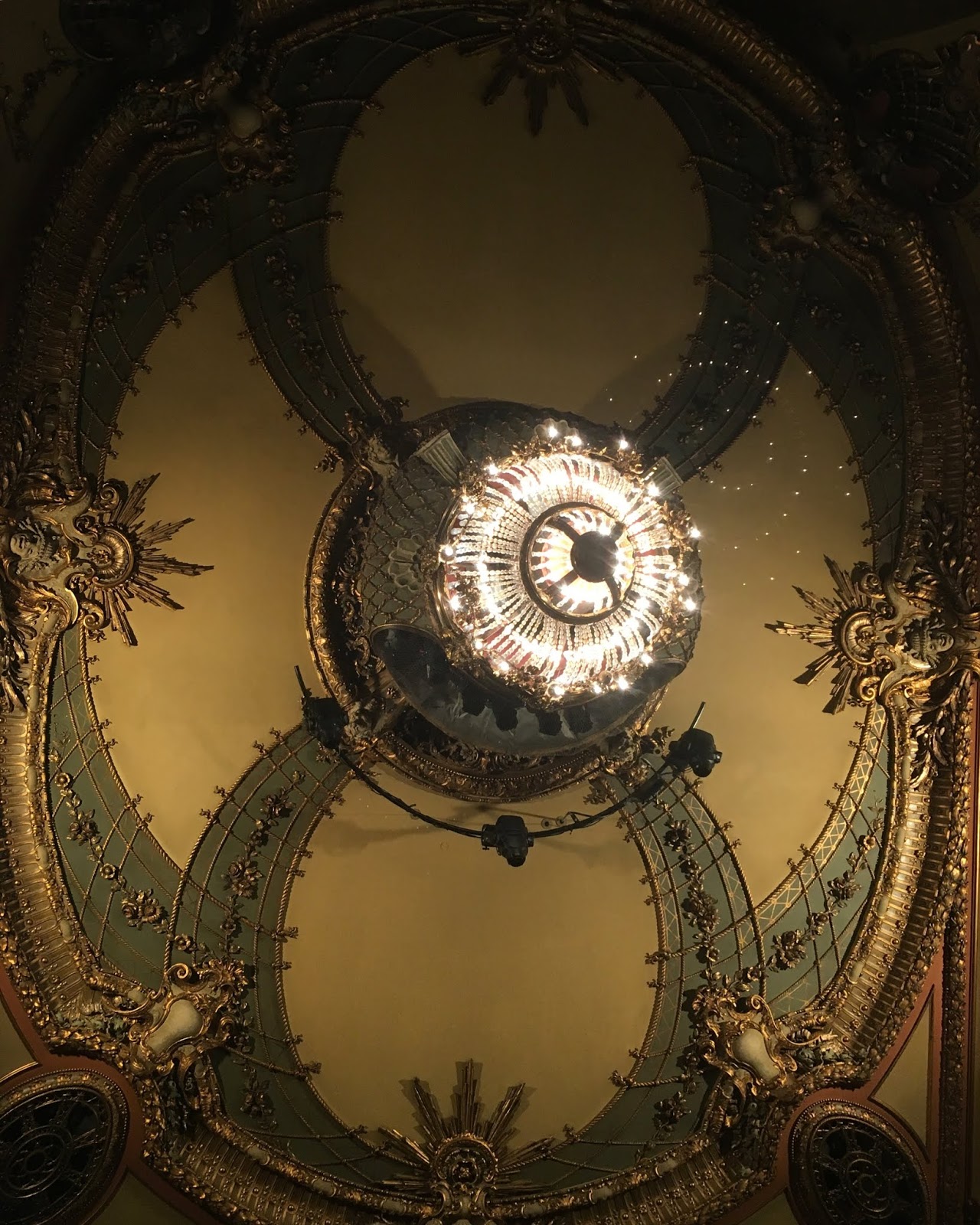
Ceiling in one of the Museums at Museum Island
(same picture, different exposure)
Rep. Living off of being a theater artist. No understudies. Purchased playbooks. No playbills. No advertisements. 

der Theaterzettel - playbill 

Ceiling at Berliner Ensemble
(I like ceilings)
It always surprises me when phrases can be literally translated from German to English. Each language usually has their own way of expressing things. For example, in English we say: "there are," as in "There are three reasons why..." In German you say, "es gibt," as in, "Es gibt drei Gründe warum..." which would literally mean "it gives three reasons why..." The expression is different, though the meaning is the same.

Here are some shared phrases I learned from watching the shows this week (i.e. their literal translation and meaning line up): 


wie Sie wünschen - as you wish
Wenn man vom Teufel spricht - speak of the devil

A Selfie from the Bathroom at Charlottenburg
(there was really good lighting)

That's all for now. Tune in next time for some more thoughts.


Leben In Der Unbequem


When I saw on the itinerary that we had an option to waitlist Hamlet or not I jumped at the idea. It’s one of my favorite plays and the Schaubühne has amazed me thus far so of course I was very determined to get a seat. Fast forward to a few days later when we were sitting in the lobby for 3 hours, I had somewhat a change of heart. Of course I wanted to still see the show but I had decided that if there were only a few tickets available I would give mine up and go back to the hotel to write a few blog posts. After 3 hours of sitting by myself in the window with nothing but my thoughts and the occasional German person that would perch next to me, I was quite bored. And to be honest, in that moment I did not enjoy it, yet looking back on the time it was SO valuable to me. I don’t think that I let myself sit in the uncomfortable enough, or let myself get bored. I heard a podcast once that was discussing concerns for the future generations of babies because now we do not let our children get bored. There is always constantly some type of stimulant for children whether or be technology or just giving them attention. They argued that a child’s boredom is essential for their intellectual growth. When we are bored, we have nothing but our thoughts and our imagination which is a muscle that needs to constantly be excercise to increase creativity and intellect. 
IMG_5123.jpeg
2 kids passed out in the Schaubühne waiting room.


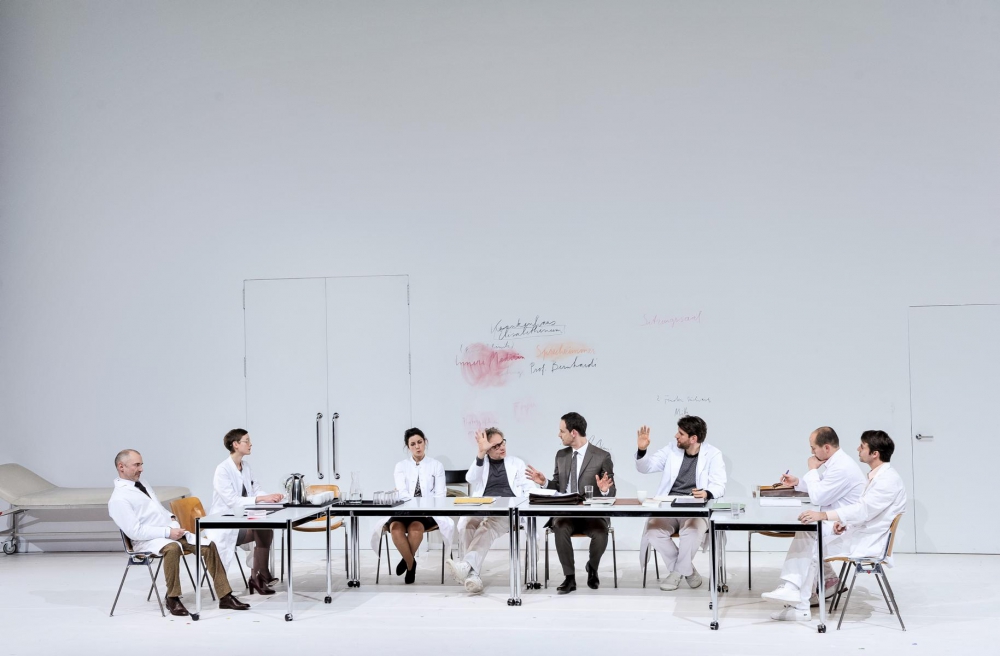
This discomfort that I lived in during the waiting period was then reflected later that night in the show Hamlet. Though I have to say it was one of my favorite productions we have seen thus far, I had a few critiques and concerns for the audience. After our conversation with Lars I realized how truly important it is to sit in discomfort. There were things in that show that (whether intentionally or not) evokes discomfort from the audience which is a feeling that is uncommon for my generation. Which can be a good thing, but generally is a concern I have as an artist. Take trigger warnings for example. Yes, they are needed and important for people who experience PTSD or seizures, yet they do not allow the audience to sit in the discomfort of a situation. Say for example, you go to a show that posts a sign warning that there will be extremely racist or violent acts portrayed in the production. You now have the choice to say "no" to that experience. Yes, watching someone get severely hurt or dehumanized might be very uncomfortable, but it also might be something you need to see. You might come out of that production with a whole new outlook on the world and your actions. That is what sitting in something uncomfortable can do for you.

If audience members are only going to a show to be 100% happy and pleased the entire performance, they will never get anything impactful out of it. What I'm trying to say is by being uncomfortable for a moment, we can better learn about ourselves, the world around us, and what we think about both of those subjects, therefore creating the kind of real change that I believe theatre can bring.

Willem Ehrenfreund living in the uncomfortable.

IMG_5124.jpeg
Izzy Valdes and Charlotte Fountain-Jardim simultaneously living in the uncomfortable.


IMG_5125.jpeg
Izzy Valdes living in the uncomfortable after she has realized it is called Charlottenburg Palace, not Izzyenburg Palace. 
IMG_5126.jpeg
Lydia Forsythe living in the uncomfortable MID. AIR.
IMG_5130.jpeg
Charlotte Fountain-Jardim living in the uncomfortable, after she has realized there are one too many cameras on her and she will never be Heidi Klum :/ 
IMG_5122.jpeg
;)